
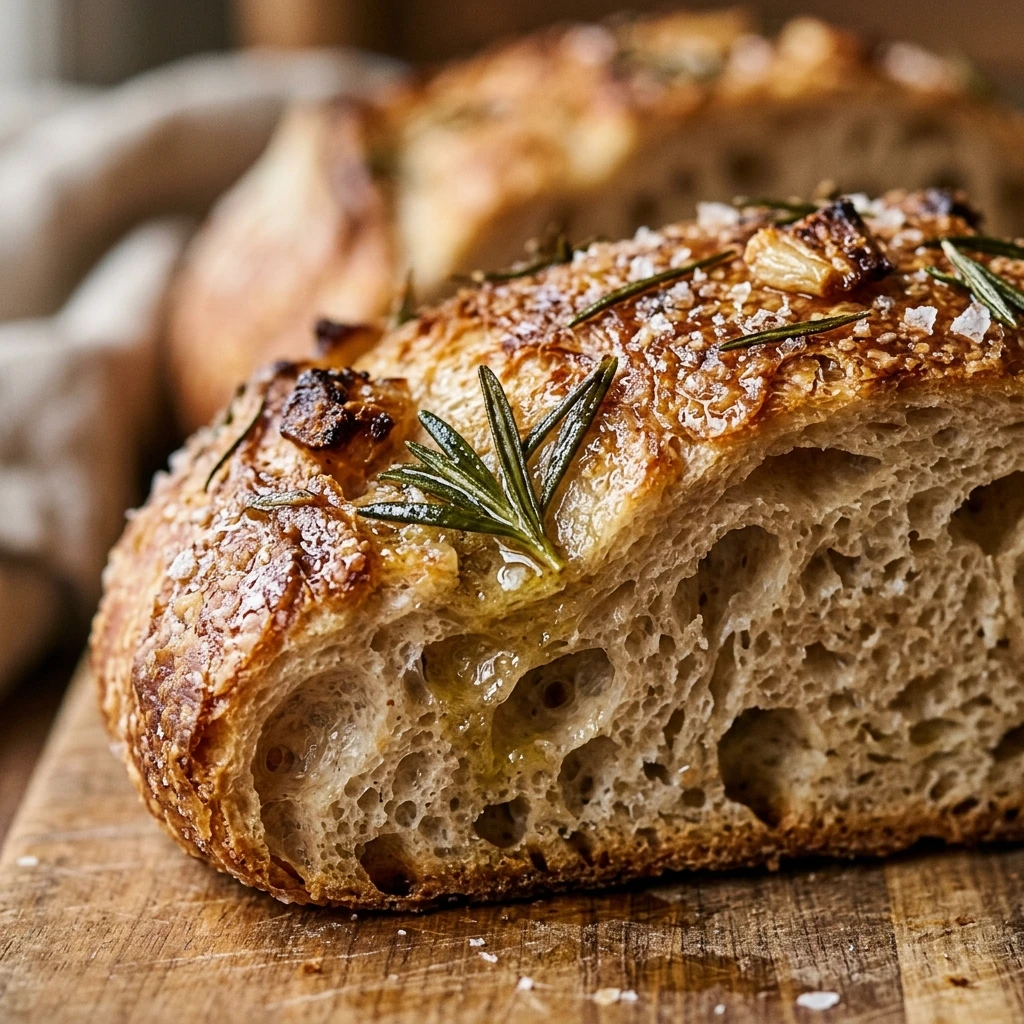
Sourdough Discard Rosemary Garlic Bread
There is nothing quite like the aroma of fresh bread wafting through your kitchen, especially when it involves the savory notes of roasted garlic and earthy rosemary. If you have been maintaining a sourdough starter, you know the struggle of having leftover discard. This Sourdough Discard Rosemary Garlic Bread is the ultimate solution, turning what would be waste into a golden, flavorful loaf with a soft crumb and a crispy crust.
This recipe is perfect for bakers who want that signature tangy sourdough flavor without the multi-day commitment of a traditional loaf. By using your discard and a small boost of commercial yeast, you can have a beautiful, artisan-style bread ready for dinner the same day. It pairs perfectly with pasta, soups, or even just a thick smear of salted butter.
Recipe Information
- Prep Time: 20 minutes
- Cook Time: 30 minutes
- Total Time: 2 hours 50 minutes
- Servings: 8
- Difficulty Level: Medium
Nutrition Information
- Calories per serving: 245
- Protein: 6g
- Carbohydrates: 42g
- Fat: 6g
- Fiber: 2g
- Sugar: 1g
- Sodium: 450mg
Why Make This Sourdough Discard Rosemary Garlic Bread
One of the best reasons to make this bread is its incredible flavor profile. The sourdough discard provides a subtle acidity that balances perfectly with the richness of the olive oil and the pungent, sweet notes of minced garlic. Unlike plain white bread, this loaf has character and a complex depth of flavor that usually takes days to develop.
It is also an eco-friendly way to bake. Instead of pouring your sourdough discard down the drain, you are transforming it into a centerpiece for your meal. The addition of fresh rosemary adds a piney, floral aroma that elevates the bread from a simple side dish to a gourmet experience that your family will request again and again.
How to Make Sourdough Discard Rosemary Garlic Bread
Making this bread is a straightforward process that involves mixing your ingredients, allowing for a steady rise, and topping the dough with a fragrant herb oil before baking to perfection. Follow these steps to achieve a professional-looking loaf right in your home oven.
Ingredients
- 1 cup (approx. 240g) sourdough discard (unfed)
- 3 cups all-purpose flour or bread flour
- 1 cup warm water
- 2 teaspoons instant yeast
- 1 tablespoon honey or sugar
- 2 teaspoons sea salt
- 3 tablespoons extra virgin olive oil
- 4 cloves garlic, finely minced
- 2 tablespoons fresh rosemary, chopped
- 1/2 teaspoon flaky sea salt (for topping)
Directions
Step 1: Activate the Yeast and Mix the Dough
In a large mixing bowl, combine the warm water, honey, and instant yeast. Let it sit for about 5 minutes until it becomes foamy. Stir in the sourdough discard and 2 tablespoons of the olive oil. Gradually add the flour and sea salt, mixing until a shaggy dough forms.
Step 2: Kneading the Dough
Turn the dough out onto a lightly floured surface. Knead the dough for about 8 to 10 minutes until it becomes smooth, elastic, and slightly tacky but not sticky. If you are using a stand mixer, use the dough hook attachment on medium-low speed for about 6 minutes.
Step 3: The First Rise
Place the kneaded dough into a lightly greased bowl. Cover it with a damp cloth or plastic wrap. Set the bowl in a warm, draft-free spot and let the dough rise until it has doubled in size, which usually takes about 1 to 1.5 hours depending on the temperature of your kitchen.
Step 4: Shaping and Topping
Punch the dough down to release excess air. Shape it into a round boule or an oval loaf and place it on a parchment-lined baking sheet or in a greased Dutch oven. In a small bowl, mix the remaining tablespoon of olive oil with the minced garlic and chopped rosemary. Brush this mixture generously over the top of the dough and sprinkle with flaky sea salt.
Step 5: Final Proof and Baking
Preheat your oven to 400°F (200°C). Let the shaped loaf rest for another 30 minutes while the oven heats. Use a sharp knife or a bread lame to score the top of the loaf. Bake for 25 to 30 minutes, or until the crust is a deep golden brown and the bread sounds hollow when tapped on the bottom. Let it cool on a wire rack before slicing.
How to Serve Sourdough Discard Rosemary Garlic Bread
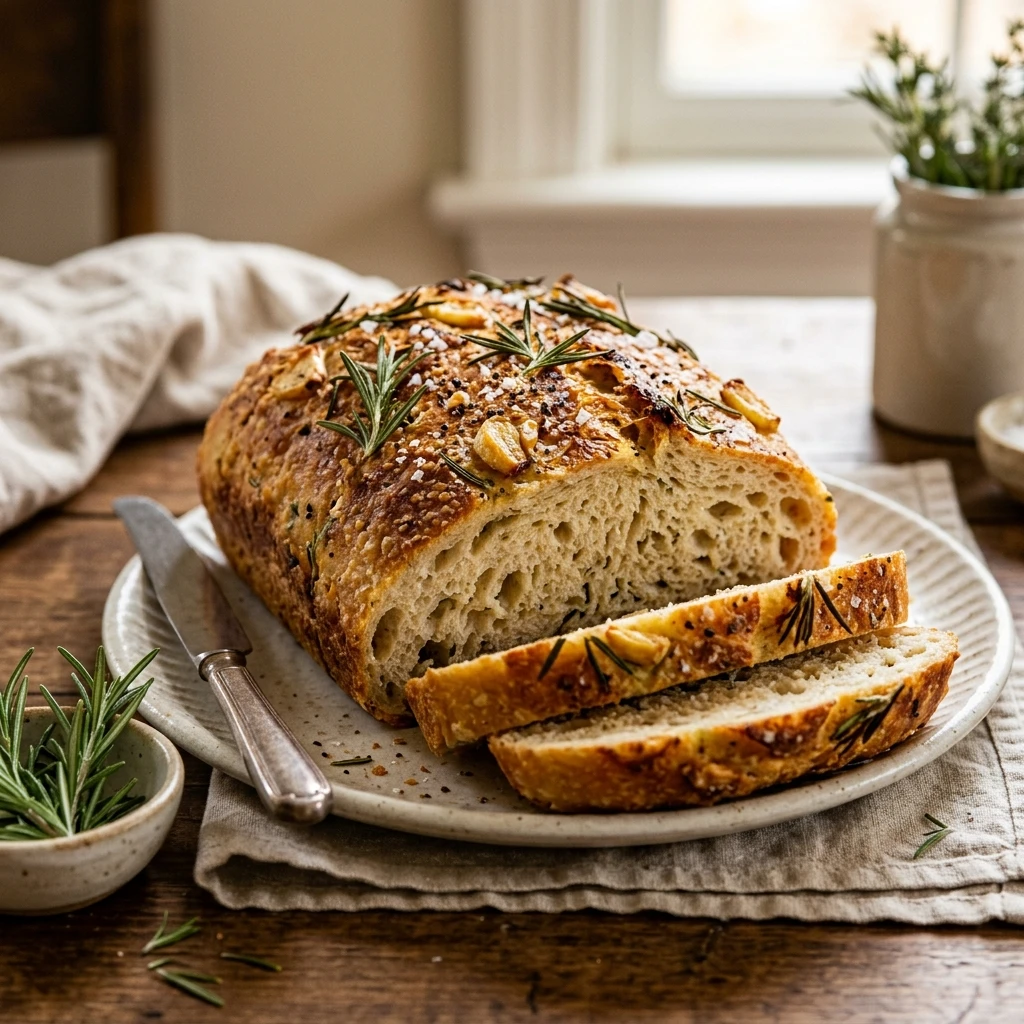
This bread is best served warm from the oven. Slice it into thick wedges and serve it alongside a hearty beef stew or a creamy tomato basil soup. It also makes an incredible base for avocado toast or a gourmet grilled cheese sandwich. For a simple appetizer, serve slices with a small bowl of high-quality balsamic vinegar and olive oil for dipping.
How to Store Sourdough Discard Rosemary Garlic Bread
To keep your bread fresh, store it in a paper bag at room temperature for up to two days. Avoid plastic bags, as they can make the crust soft and chewy. If you want to store it longer, wrap the loaf tightly in aluminum foil and then place it in a freezer bag. It will stay fresh in the freezer for up to three months. Reheat in a 350°F oven for 10 minutes to restore the crispy crust.
Expert Tips for Perfect Sourdough Discard Rosemary Garlic Bread
For the best results, use fresh rosemary rather than dried. The oils in fresh rosemary are much more potent and provide a better aroma. Additionally, make sure your garlic is finely minced so it doesn’t burn in the oven; large chunks can turn bitter if they get too dark. If you find your crust is browning too quickly, loosely tent the loaf with foil during the last 10 minutes of baking.
Delicious Variations
You can easily customize this recipe to suit your taste. Try adding 1/2 cup of shredded parmesan cheese to the dough during the kneading process for a cheesy twist. You can also swap the rosemary for fresh thyme or oregano. For a bit of heat, sprinkle some red chili flakes into the garlic oil topping before brushing it onto the dough.
Frequently Asked Questions
Q: Can I make this without the instant yeast?
If your sourdough discard is very active, you can omit the yeast, but the rise time will be significantly longer (anywhere from 6 to 12 hours) and the bread will be much denser.
Q: My sourdough discard is straight from the fridge. Can I use it?
Yes, you can use cold discard. However, it may slow down the rise time slightly. For the best results, let the discard sit at room temperature for 30 minutes before mixing the dough.
Q: Can I use bread flour instead of all-purpose flour?
Absolutely! Bread flour has a higher protein content, which will result in a slightly chewier texture and a better rise. It is actually preferred if you want a more “artisan” feel.
Q: What if I don’t have fresh rosemary?
You can use 2 teaspoons of dried rosemary instead. Be sure to crush the dried herbs between your fingers before adding them to the oil to help release their flavor.
Q: Why did my garlic turn blue or green?
Sometimes garlic reacts with the acidity in the sourdough discard, causing a color change. This is a natural chemical reaction and is perfectly safe to eat!
Conclusion
Sourdough Discard Rosemary Garlic Bread is a fantastic way to minimize kitchen waste while creating a high-quality, flavorful loaf of bread. The combination of the tangy sourdough, aromatic rosemary, and savory garlic creates a sensory experience that is hard to beat. Whether you are a beginner or an experienced baker, this recipe is a rewarding addition to your baking rotation. Enjoy the process and the delicious results!


Sourdough Discard Rosemary Garlic Bread
- Total Time: 2 hours 50 minutes
- Diet: Vegetarian
Ingredients
- 1 cup (approx. 240g) sourdough discard (unfed)
- 3 cups all-purpose flour or bread flour
- 1 cup warm water
- 2 teaspoons instant yeast
- 1 tablespoon honey or sugar
- 2 teaspoons sea salt
- 3 tablespoons extra virgin olive oil
- 4 cloves garlic, finely minced
- 2 tablespoons fresh rosemary, chopped
- 1/2 teaspoon flaky sea salt (for topping)
Instructions
- In a large mixing bowl, combine the warm water, honey, and instant yeast. Let it sit for about 5 minutes until it becomes foamy. Stir in the sourdough discard and 2 tablespoons of the olive oil. Gradually add the flour and sea salt, mixing until a shaggy dough forms.
- Turn the dough out onto a lightly floured surface. Knead the dough for about 8 to 10 minutes until it becomes smooth, elastic, and slightly tacky but not sticky. If you are using a stand mixer, use the dough hook attachment on medium-low speed for about 6 minutes.
- Place the kneaded dough into a lightly greased bowl. Cover it with a damp cloth or plastic wrap. Set the bowl in a warm, draft-free spot and let the dough rise until it has doubled in size, which usually takes about 1 to 1.5 hours depending on the temperature of your kitchen.
- Punch the dough down to release excess air. Shape it into a round boule or an oval loaf and place it on a parchment-lined baking sheet or in a greased Dutch oven. In a small bowl, mix the remaining tablespoon of olive oil with the minced garlic and chopped rosemary. Brush this mixture generously over the top of the dough and sprinkle with flaky sea salt.
- Preheat your oven to 400°F (200°C). Let the shaped loaf rest for another 30 minutes while the oven heats. Use a sharp knife or a bread lame to score the top of the loaf. Bake for 25 to 30 minutes, or until the crust is a deep golden brown and the bread sounds hollow when tapped on the bottom. Let it cool on a wire rack before slicing.
- Cook Time: 2 hours 50 minutes