
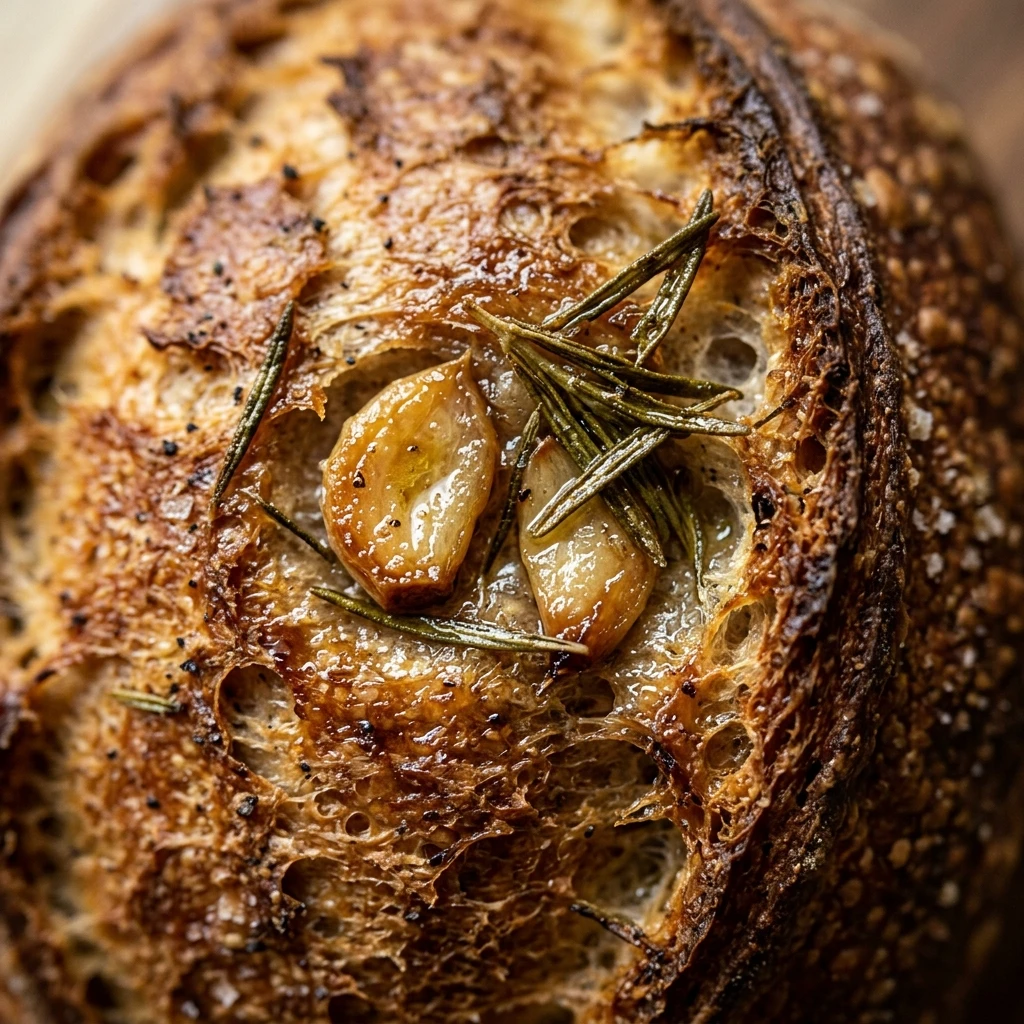
Garlic Rosemary Sourdough Bread
There is nothing quite like the aroma of freshly baked sourdough filling your home. When you combine the tangy, complex flavors of a slow-fermented loaf with the earthy scent of rosemary and the buttery richness of roasted garlic, you create a masterpiece. This Garlic Rosemary Sourdough Bread is the ultimate artisan loaf, featuring a shatteringly crisp crust and a soft, airy interior that is packed with savory goodness.
Making sourdough is a labor of love, but the results are incredibly rewarding. This specific recipe takes the classic sourdough base and elevates it with aromatic herbs and sweet, mellow garlic. Whether you are a seasoned baker or just starting your sourdough journey, this loaf is sure to become a favorite in your kitchen. It is perfect for dipping in olive oil, making the best grilled cheese of your life, or simply enjoying toasted with a thick layer of salted butter.
Recipe Information
- Prep Time: 18 hours (includes fermentation and proofing)
- Cook Time: 45 minutes
- Total Time: 18 hours 45 minutes
- Servings: 12 slices
- Difficulty Level: Medium
Nutrition Information
- Calories per serving: 165 kcal
- Protein: 5g
- Carbohydrates: 34g
- Fat: 1g
- Fiber: 2g
- Sugar: 0.5g
- Sodium: 380mg
Why Make This Garlic Rosemary Sourdough Bread
This bread offers a sensory experience that store-bought loaves simply cannot match. The slow fermentation process breaks down gluten and phytic acid, making it easier to digest and giving it that signature sourdough tang. Adding fresh rosemary and roasted garlic creates a savory profile that pairs beautifully with almost any meal.
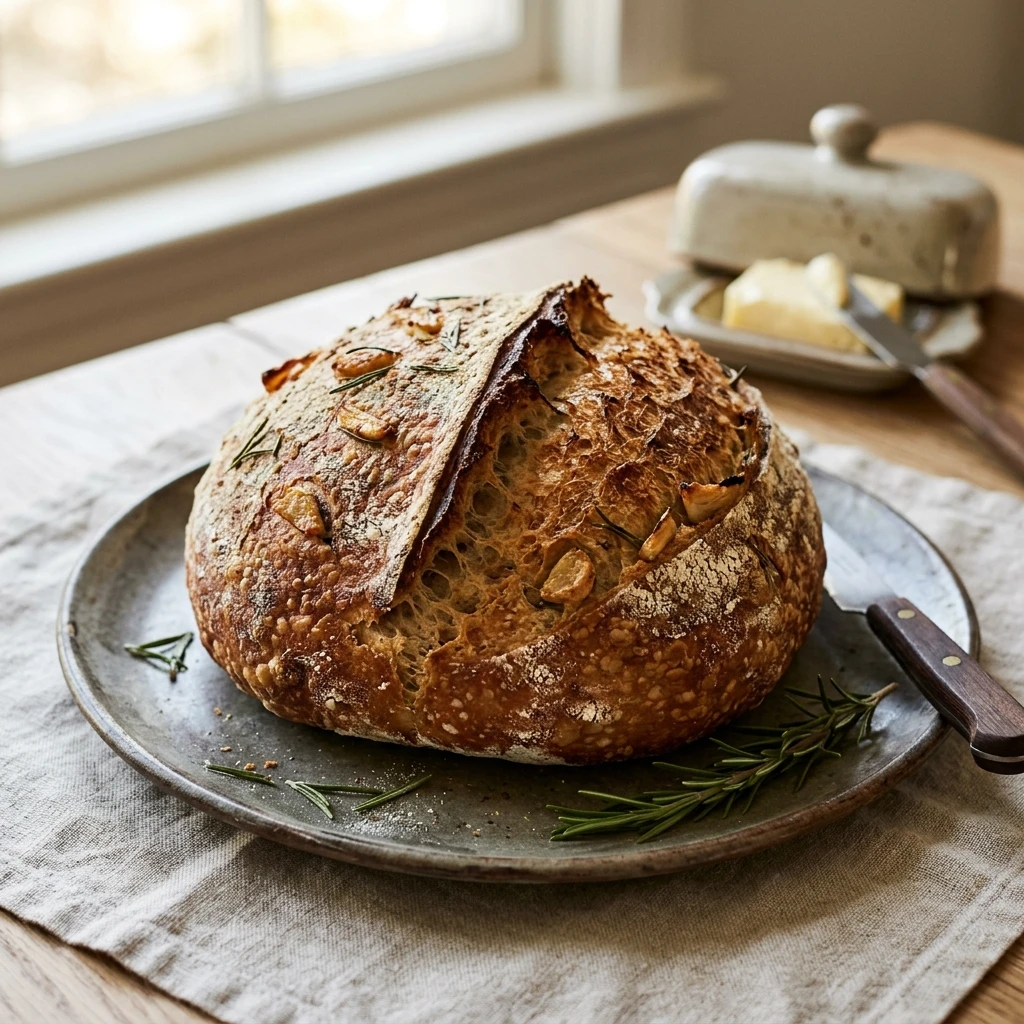
It is also a fantastic way to impress guests or give a thoughtful, homemade gift. The golden-brown crust and the visible flecks of green rosemary make it look like it came straight from a high-end French bakery. Plus, the kitchen smells absolutely divine while it bakes!
How to Make Garlic Rosemary Sourdough Bread
Creating this loaf involves a few key stages: mixing, bulk fermentation, folding in the inclusions, shaping, and baking. Follow these steps carefully to achieve that perfect crumb and flavorful crust.
Ingredients
- 500g Bread Flour (high protein)
- 350g Warm Water
- 100g Active Sourdough Starter (fed and bubbly)
- 10g Sea Salt
- 1 head of Roasted Garlic (cloves mashed)
- 2 tablespoons Fresh Rosemary, finely chopped
- Extra flour for dusting
Directions
Step 1: Mixing the Dough
In a large mixing bowl, whisk together your warm water and active sourdough starter until the starter is mostly dissolved. Add the bread flour and salt. Mix by hand or with a sturdy spoon until a shaggy dough forms and no dry flour remains. Cover the bowl with a damp cloth and let it rest for 30 minutes to allow for autolyse.
Step 2: Incorporating Inclusions
After the rest period, spread the mashed roasted garlic and chopped rosemary over the top of the dough. Gently fold the dough over itself several times to begin incorporating the ingredients. You don’t need to perfectly mix them yet, as the stretch-and-fold process will distribute them evenly.
Step 3: Bulk Fermentation and Folds
Cover the bowl and let the dough rise in a warm spot. Over the next 2 to 3 hours, perform four sets of “stretch and folds” every 30 minutes. To do this, grab one side of the dough, pull it upward, and fold it over the center. Rotate the bowl and repeat four times. This builds strength in the dough and incorporates the garlic and rosemary thoroughly.
Step 4: The Long Rise
After the final set of folds, let the dough sit undisturbed in a warm place until it has grown in size by about 50% and looks bubbly and jiggly. This usually takes 4 to 6 hours depending on the temperature of your kitchen.
Step 5: Shaping and Cold Proof
Gently turn the dough onto a lightly floured surface. Fold the edges toward the center to create tension and shape it into a round boule or oval batard. Place the dough upside down into a well-floured proofing basket (banneton). Cover and place in the refrigerator for 12 to 15 hours. This cold proof develops the flavor and makes the dough easier to score.
Step 6: Scoring and Baking
Preheat your oven to 450°F (230°C) with a Dutch oven inside for at least 45 minutes. Carefully flip the cold dough onto a piece of parchment paper. Use a sharp blade or lame to score a deep slash across the top. Carefully lower the dough into the hot Dutch oven, cover with the lid, and bake for 20 minutes. Remove the lid and bake for another 20 to 25 minutes until the crust is deeply browned and the internal temperature reaches 205°F.
How to Serve Garlic Rosemary Sourdough Bread
Allow the bread to cool completely on a wire rack for at least 2 hours before slicing. This is crucial as the bread continues to cook inside. Serve slices with a high-quality olive oil and balsamic vinegar dip. It also makes an incredible base for avocado toast or a side for hearty beef stews and pasta dishes. For a simple treat, toast a slice and melt a piece of sharp white cheddar on top.
How to Store Garlic Rosemary Sourdough Bread
Store the bread cut-side down on a wooden cutting board for the first 24 hours to maintain the crust’s texture. After that, keep it in a paper bag or a bread box. Avoid plastic bags, as they will make the crust soft. If you want to keep it longer, slice the loaf and freeze it in a freezer-safe bag. You can toast individual slices directly from the freezer for a quick, fresh-tasting snack.
Expert Tips for Perfect Garlic Rosemary Sourdough Bread
For the best flavor, use fresh rosemary rather than dried. If you find your garlic is burning on the outside of the loaf, make sure to tuck the garlic pieces well into the dough during the shaping process. Also, ensure your starter is at its peak of activity (doubled in size) before you start mixing to ensure a good rise. If your kitchen is cold, you can place your dough in an oven with only the light turned on to create a warm fermentation environment.
Delicious Variations
If you want to experiment, try adding 50g of grated Parmesan cheese along with the garlic and rosemary for a “Cheesy Garlic” version. You can also swap the rosemary for fresh thyme or sage for a different herbal profile. For a bit of heat, add a teaspoon of red pepper flakes to the dough during the folding stage. Another great option is to add lemon zest to the mix for a bright, citrusy finish that cuts through the richness of the garlic.
Frequently Asked Questions
Q: Can I use garlic powder instead of roasted garlic?
Yes, you can use 1-2 tablespoons of garlic powder, but the flavor will be less sweet and mellow than roasted garlic. Roasted garlic provides a much deeper, buttery flavor profile.
Q: My bread didn’t rise very much. What happened?
This is often due to an inactive starter or a room that is too cold. Ensure your starter is bubbly and active, and give the dough more time to ferment if your kitchen is chilly.
Q: Do I have to use a Dutch oven?
While a Dutch oven is best for trapping steam and creating a crispy crust, you can bake it on a baking stone with a tray of water on the bottom rack to create steam.
Q: How do I roast garlic easily?
Cut the top off a head of garlic, drizzle with olive oil, wrap in foil, and bake at 400°F (200°C) for about 40 minutes until the cloves are soft and golden.
Q: Can I use dried rosemary?
You can, but use only 1 tablespoon as dried herbs are more concentrated. Soak them in a little water for 10 minutes before adding so they don’t draw moisture out of the dough.
Conclusion
Garlic Rosemary Sourdough Bread is a rewarding bake that brings professional-quality bread into your home kitchen. The combination of slow-fermented dough and aromatic inclusions creates a loaf that is as beautiful as it is delicious. While it requires patience, the first bite of that warm, savory bread makes every hour of waiting worth it. Happy baking!

Garlic Rosemary Sourdough Bread
- Total Time: 18 hours 45 minutes
- Diet: Vegetarian
Ingredients
- 500g Bread Flour (high protein)
- 350g Warm Water
- 100g Active Sourdough Starter (fed and bubbly)
- 10g Sea Salt
- 1 head of Roasted Garlic (cloves mashed)
- 2 tablespoons Fresh Rosemary, finely chopped
- Extra flour for dusting
Instructions
- In a large mixing bowl, whisk together your warm water and active sourdough starter until the starter is mostly dissolved. Add the bread flour and salt. Mix by hand or with a sturdy spoon until a shaggy dough forms and no dry flour remains. Cover the bowl with a damp cloth and let it rest for 30 minutes to allow for autolyse.
- After the rest period, spread the mashed roasted garlic and chopped rosemary over the top of the dough. Gently fold the dough over itself several times to begin incorporating the ingredients. You don’t need to perfectly mix them yet, as the stretch-and-fold process will distribute them evenly.
- Cover the bowl and let the dough rise in a warm spot. Over the next 2 to 3 hours, perform four sets of “stretch and folds” every 30 minutes. To do this, grab one side of the dough, pull it upward, and fold it over the center. Rotate the bowl and repeat four times. This builds strength in the dough and incorporates the garlic and rosemary thoroughly.
- After the final set of folds, let the dough sit undisturbed in a warm place until it has grown in size by about 50% and looks bubbly and jiggly. This usually takes 4 to 6 hours depending on the temperature of your kitchen.
- Gently turn the dough onto a lightly floured surface. Fold the edges toward the center to create tension and shape it into a round boule or oval batard. Place the dough upside down into a well-floured proofing basket (banneton). Cover and place in the refrigerator for 12 to 15 hours. This cold proof develops the flavor and makes the dough easier to score.
- Preheat your oven to 450°F (230°C) with a Dutch oven inside for at least 45 minutes. Carefully flip the cold dough onto a piece of parchment paper. Use a sharp blade or lame to score a deep slash across the top. Carefully lower the dough into the hot Dutch oven, cover with the lid, and bake for 20 minutes. Remove the lid and bake for another 20 to 25 minutes until the crust is deeply browned and the internal temperature reaches 205°F.
- Cook Time: 18 hours 45 minutes