
Rosemary Sourdough Bread
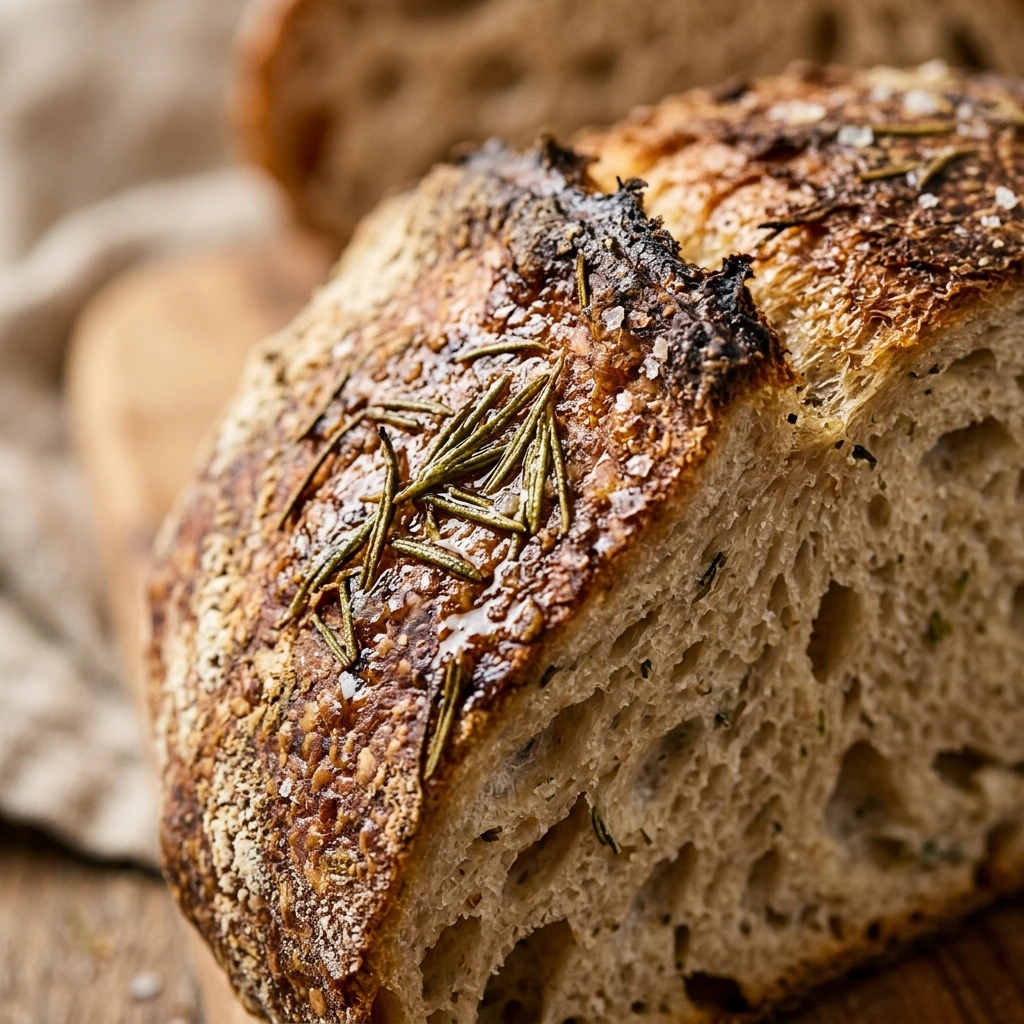
There is nothing quite like the smell of fresh bread baking in the oven, especially when it is infused with the earthy, pine-like aroma of fresh rosemary. Sourdough bread is a labor of love that rewards you with a complex flavor and a beautiful, crispy crust. This Rosemary Sourdough Bread takes the classic artisanal loaf to the next level by adding a layer of herbal depth that pairs perfectly with everything from morning eggs to savory dinners.
Whether you are a seasoned baker or just starting your sourdough journey, adding herbs is one of the easiest ways to customize your bread. The fermentation process mellows the rosemary while allowing its fragrance to permeate every crumb. In this guide, we will walk through the steps to achieve a perfectly airy interior and a golden, crackly exterior that will make your kitchen smell like a professional bakery.
Recipe Information
- Prep Time: 20 hours (includes fermentation and proofing)
- Cook Time: 45 minutes
- Total Time: 20 hours 45 minutes
- Servings: 12 slices
- Difficulty Level: Medium
Nutrition Information
- Calories per serving: 165 kcal
- Protein: 5g
- Carbohydrates: 33g
- Fat: 1.5g
- Fiber: 2g
- Sugar: 0g
- Sodium: 390mg
Why Make This Rosemary Sourdough Bread
This bread is a sensory experience. The combination of the tangy sourdough starter and the woody notes of fresh rosemary creates a sophisticated flavor profile that store-bought bread simply cannot match. It is also incredibly versatile; it makes the world’s best grilled cheese sandwiches and is the perfect companion for a bowl of hearty tomato soup.
Beyond the taste, making your own sourdough is beneficial for your health. The long fermentation process breaks down gluten and phytic acid, making it easier to digest and improving the bioavailability of nutrients. By adding rosemary, you are also adding a boost of antioxidants and anti-inflammatory properties to your daily bread.
How to Make Rosemary Sourdough Bread
Creating this artisanal loaf requires patience and a gentle touch, but the process is straightforward once you understand the rhythm of the dough.
Ingredients
- 100g active sourdough starter (fed and bubbly)
- 350g warm filtered water
- 500g high-quality bread flour
- 10g fine sea salt
- 2 tablespoons fresh rosemary, finely chopped
- 1 tablespoon extra virgin olive oil (optional, for a softer crumb)
Directions
Step 1: Mixing the Dough
In a large glass bowl, whisk together your active sourdough starter and the warm water until the starter is mostly dissolved and the water looks milky. Add the bread flour and the finely chopped rosemary. Mix by hand or with a sturdy spatula until a shaggy dough forms and no dry flour remains. Cover with a damp cloth and let it rest for 30 minutes.
Step 2: Adding Salt and Initial Kneading
Sprinkle the salt over the dough. Using wet hands, squeeze the salt into the dough and begin a series of “folds” by pulling the edge of the dough up and over into the center. Rotate the bowl and repeat this for about 2 minutes until the dough feels slightly smoother. If using olive oil, incorporate it during this stage.
Step 3: Stretch and Fold Process
Over the next 2 hours, perform 4 sets of “stretch and folds” every 30 minutes. To do this, reach under one side of the dough, pull it upward until you feel resistance, and fold it over the top. Do this for all four “corners” of the dough. This builds the gluten structure without heavy kneading.
Step 4: Bulk Fermentation
Cover the bowl with plastic wrap or a damp towel. Let the dough sit at room temperature (ideally 70-75°F) for 6 to 10 hours. The dough is ready when it has grown by about 50-75% in size, looks bubbly on the surface, and jiggles slightly when the bowl is shaken.
Step 5: Shaping the Loaf
Gently turn the dough onto a lightly floured surface. Fold the edges toward the center to create a round shape. Flip the dough over so the seam is down. Using your hands, gently pull the dough toward you on the counter to create tension on the surface. Let it rest for 15 minutes, then repeat the tensioning one more time for a tight boule.
Step 6: Cold Proofing
Place the dough seam-side up into a proofing basket (banneton) or a bowl lined with a floured kitchen towel. Cover and place in the refrigerator for 12 to 15 hours. This cold proof develops the flavor and makes the dough easier to score before baking.
Step 7: Scoring and Baking
Preheat your oven to 450°F (230°C) with a Dutch oven inside for 45 minutes. Turn the cold dough onto a piece of parchment paper. Use a sharp blade or lame to cut a deep slit (score) across the top. Carefully place the dough (with the parchment) into the hot Dutch oven. Bake with the lid on for 20 minutes, then remove the lid and bake for another 20-25 minutes until the crust is a deep golden brown.
How to Serve Rosemary Sourdough Bread
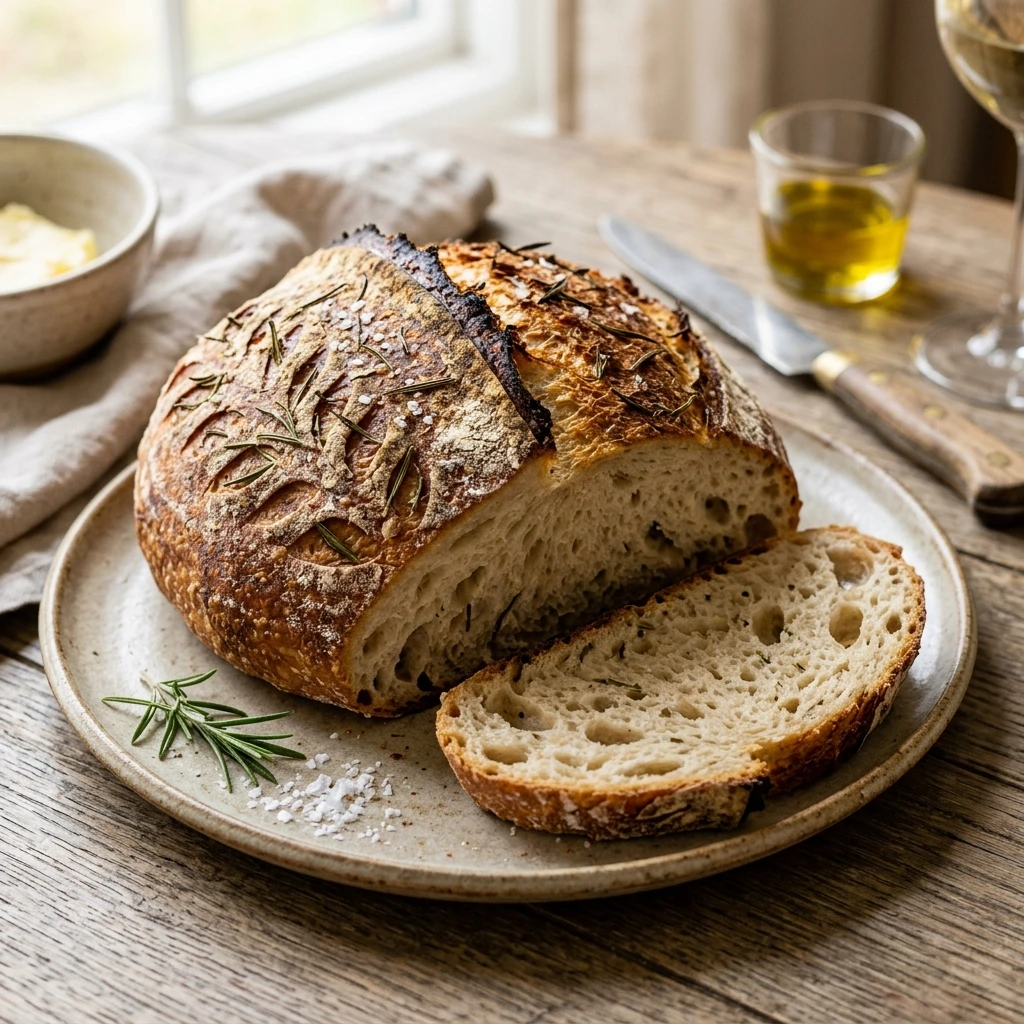
For the best experience, allow the bread to cool completely on a wire rack for at least 2 hours before slicing. This prevents the interior from becoming gummy. Serve slices toasted with salted butter or dipped in high-quality olive oil and balsamic vinegar. It also makes an incredible base for avocado toast or a savory breakfast sandwich with goat cheese and honey.
How to Store Rosemary Sourdough Bread
Store the bread cut-side down on a wooden cutting board for the first 24 hours to maintain the crust. After that, keep it in a paper bag or a bread box. Avoid plastic bags, as they will make the crust soft. For long-term storage, slice the bread and freeze it in an airtight freezer bag for up to 3 months. You can toast the slices directly from the freezer!
Expert Tips for Perfect Rosemary Sourdough Bread
To get the best results, always use fresh rosemary rather than dried. Fresh herbs provide a much more vibrant aroma and do not have the “woody” texture that dried rosemary can sometimes have. Additionally, ensure your starter is at its peak activity—it should be doubling or tripling in size within 4-6 hours of feeding before you use it in this recipe.
Delicious Variations
If you want to experiment, try adding 2 cloves of roasted garlic along with the rosemary for a savory powerhouse loaf. You can also add the zest of one lemon to the dough to brighten the herbal notes. For those who like a bit of heat, a teaspoon of cracked black pepper mixed in with the rosemary adds a wonderful spicy finish.
Frequently Asked Questions
Q: Can I use dried rosemary instead of fresh?
Yes, but use only 2 teaspoons of dried rosemary as it is much more concentrated than fresh. Soak it in a tablespoon of water for 10 minutes before adding to the dough so it doesn’t draw moisture away from the flour.
Q: My bread didn’t rise much in the oven. What happened?
This is often due to an underactive starter or over-proofing during the bulk fermentation stage. Ensure your starter is very bubbly and the dough still has some “strength” left before it goes into the fridge.
Q: Do I have to use a Dutch oven?
While a Dutch oven is best for trapping steam and creating a crispy crust, you can bake it on a baking stone. Just be sure to place a pan of hot water at the bottom of the oven to create steam during the first 20 minutes of baking.
Q: Is it okay to add the rosemary later in the process?
You can add the rosemary during the first set of stretch and folds if you forget to add it at the beginning. This will still distribute the herbs evenly through the dough.
Q: Why do I need to let the bread cool before slicing?
The bread continues to cook and set its structure as it cools. Slicing it while hot allows steam to escape too quickly, which can lead to a sticky, wet texture inside the loaf.
Conclusion
Baking Rosemary Sourdough Bread is a rewarding process that fills your home with incredible scents and provides a delicious, healthy staple for your table. With its crunchy crust and herb-speckled crumb, this loaf is sure to become a favorite in your baking rotation. Take your time, enjoy the process, and happy baking!

Rosemary Sourdough Bread
- Total Time: 20 hours 45 minutes
- Diet: Vegetarian
Ingredients
- 100g active sourdough starter (fed and bubbly)
- 350g warm filtered water
- 500g high-quality bread flour
- 10g fine sea salt
- 2 tablespoons fresh rosemary, finely chopped
- 1 tablespoon extra virgin olive oil (optional, for a softer crumb)
Instructions
- In a large glass bowl, whisk together your active sourdough starter and the warm water until the starter is mostly dissolved and the water looks milky. Add the bread flour and the finely chopped rosemary. Mix by hand or with a sturdy spatula until a shaggy dough forms and no dry flour remains. Cover with a damp cloth and let it rest for 30 minutes.
- Sprinkle the salt over the dough. Using wet hands, squeeze the salt into the dough and begin a series of “folds” by pulling the edge of the dough up and over into the center. Rotate the bowl and repeat this for about 2 minutes until the dough feels slightly smoother. If using olive oil, incorporate it during this stage.
- Over the next 2 hours, perform 4 sets of “stretch and folds” every 30 minutes. To do this, reach under one side of the dough, pull it upward until you feel resistance, and fold it over the top. Do this for all four “corners” of the dough. This builds the gluten structure without heavy kneading.
- Cover the bowl with plastic wrap or a damp towel. Let the dough sit at room temperature (ideally 70-75°F) for 6 to 10 hours. The dough is ready when it has grown by about 50-75% in size, looks bubbly on the surface, and jiggles slightly when the bowl is shaken.
- Gently turn the dough onto a lightly floured surface. Fold the edges toward the center to create a round shape. Flip the dough over so the seam is down. Using your hands, gently pull the dough toward you on the counter to create tension on the surface. Let it rest for 15 minutes, then repeat the tensioning one more time for a tight boule.
- Place the dough seam-side up into a proofing basket (banneton) or a bowl lined with a floured kitchen towel. Cover and place in the refrigerator for 12 to 15 hours. This cold proof develops the flavor and makes the dough easier to score before baking.
- Preheat your oven to 450°F (230°C) with a Dutch oven inside for 45 minutes. Turn the cold dough onto a piece of parchment paper. Use a sharp blade or lame to cut a deep slit (score) across the top. Carefully place the dough (with the parchment) into the hot Dutch oven. Bake with the lid on for 20 minutes, then remove the lid and bake for another 20-25 minutes until the crust is a deep golden brown.
- Cook Time: 20 hours 45 minutes